
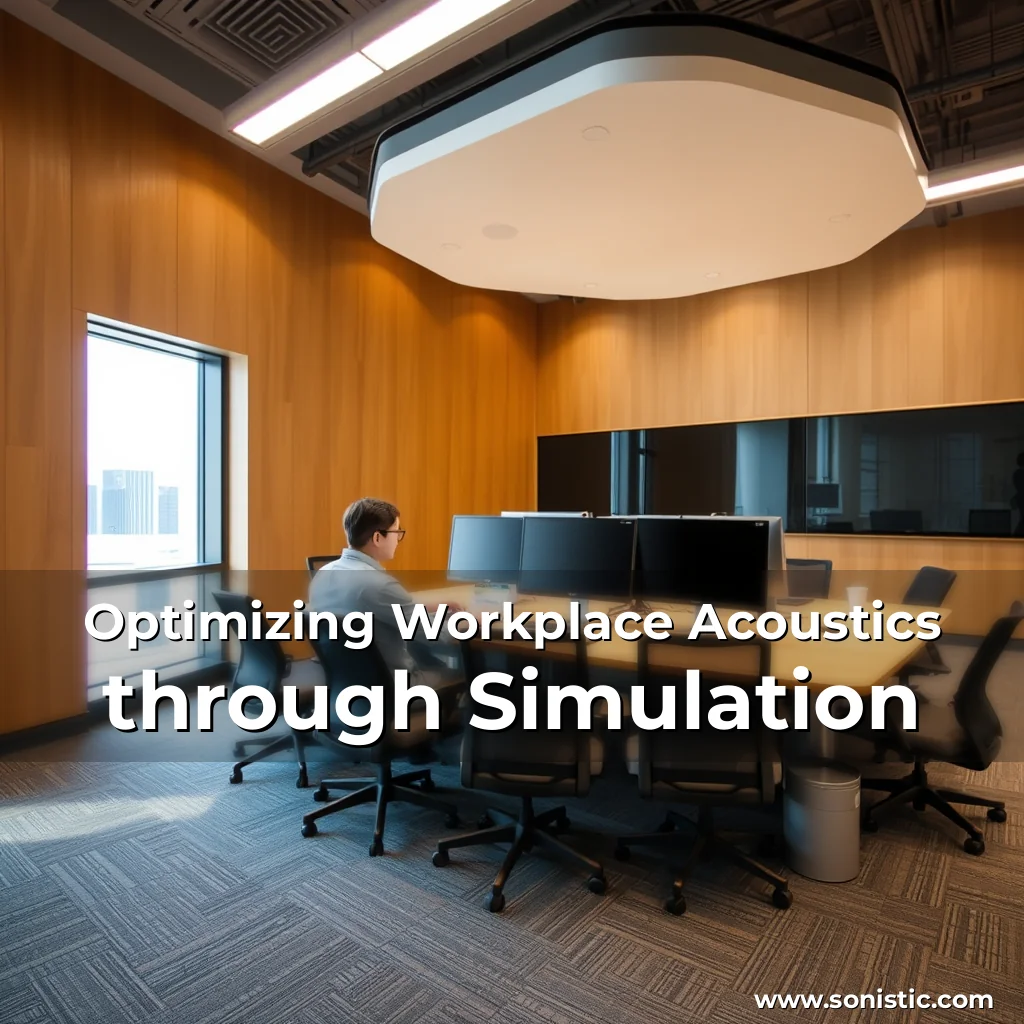
Designing Spaces that Foster Productivity and Comfort
Modern offices are increasingly moving away from traditional private offices and towards open-plan designs, where employees work in an open, collaborative environment. While this design approach can foster teamwork and communication, it can also lead to distractions and decreased productivity. One way to mitigate this issue is to optimize the acoustics of the workspace, using simulation software to predict how sound will propagate through the building design.
Understanding the Basics of Sound Propagation
Sound waves travel in three dimensions, and the way they interact with objects in a room can significantly affect the way they sound. Acoustical engineers, like composers, play a crucial role in shaping the effect that sound has on human ears. By using simulation software, such as COMSOL Multiphysics, acoustical engineers can model the behavior of sound waves in a proposed room design, taking into account factors such as room size, shape, and materials.
- Room size and shape can significantly affect the way sound waves interact with objects in the room.
- Materials, such as sound-absorbing panels and acoustic insulation, can greatly impact the acoustics of a room.
- Simulation software can help acoustical engineers predict how sound waves will propagate through a room, taking into account factors such as sound frequencies and absorption.
Using Simulation to Optimize Workplace Acoustics
The Swiss consultancy Zeugin Bauberatungen uses simulation software to optimize the acoustics of modern workplaces. By analyzing the sound waves that propagate through a proposed room design, Zeugin’s team can suggest practical improvements that improve the acoustical conditions of the workspace.
- Zeugin’s team uses the COMSOL Multiphysics software to model the behavior of sound waves in a proposed room design.
- They analyze the sound waves that propagate through the room, taking into account factors such as sound frequencies and absorption.
- The team suggests practical improvements, such as the installation of sound-absorbing panels or acoustic insulation, to improve the acoustical conditions of the workspace.
Case Study: Improving the Acoustics of an Office Building
Zeugin’s team conducted a case study on an office building in the Swiss city of Ostermundigen, which featured a large open room with shared work tables, a wide wall of windows, and a concrete ceiling with suspended acoustical panels. Using simulation software, the team analyzed the sound waves that propagated through the room and identified areas for improvement.
| Indicators | Ranges |
|---|---|
| Speech Intelligibility | Good, Moderate, Poor |
| Deflection Distance | 12 meters |
Benefits of Simulation-Driven Design
The use of simulation software in designing workplaces can have numerous benefits, including improved acoustics, increased productivity, and enhanced comfort. By using simulation software, acoustical engineers can predict how sound waves will propagate through a room, taking into account factors such as sound frequencies and absorption.
“Due to the functionality and flexibility of the COMSOL software, we can construct models and perform comparable calculations for many different types of projects. Based on our follow-up measurements, we’ve found that our simulated results closely match real-world conditions. This gives us confidence in our findings and reassures our customers as well.” – Thomas Zeugin
The use of simulation software in designing workplaces can have a significant impact on the acoustics of the space, improving productivity, comfort, and overall work experience. By understanding the basics of sound propagation and using simulation software, acoustical engineers can optimize the acoustics of modern workplaces, creating spaces that foster collaboration, creativity, and innovation.