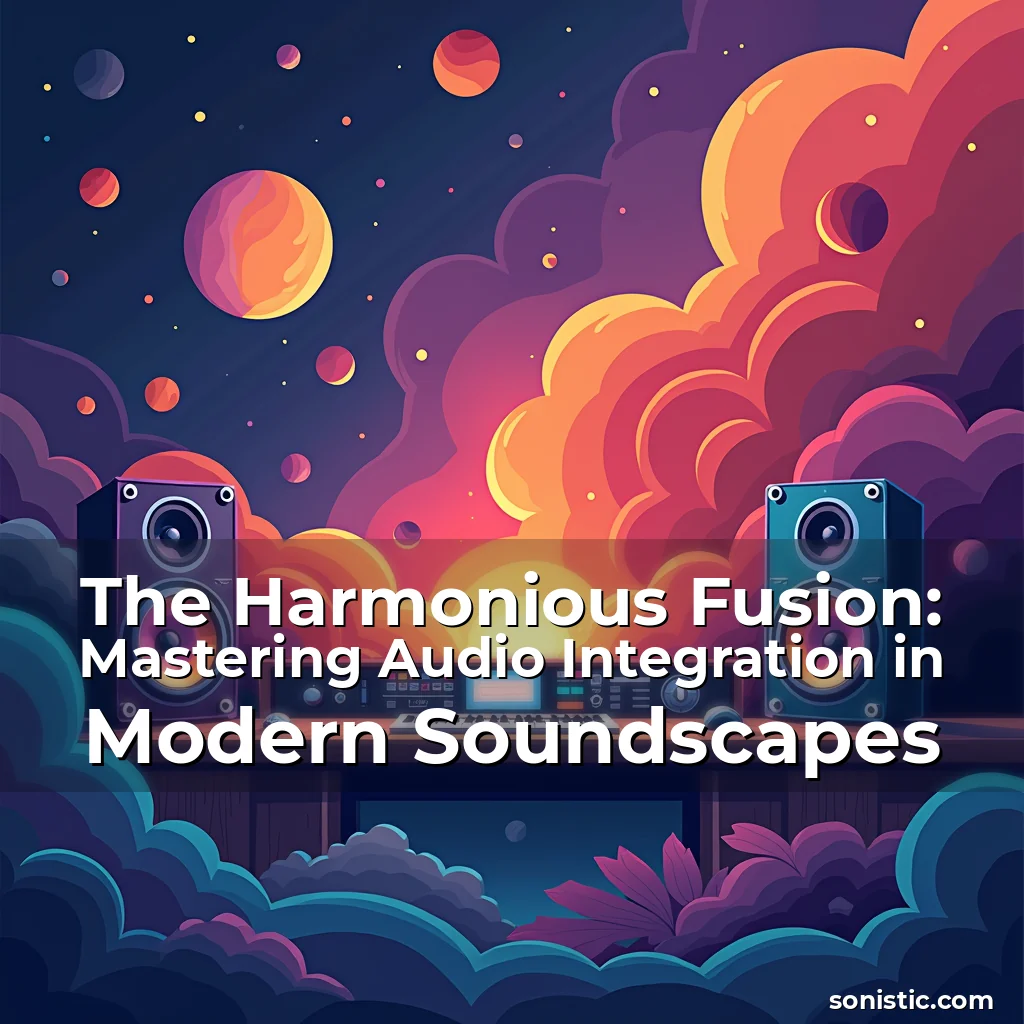
The Harmonious Fusion: Mastering Audio Integration in Modern Soundscapes
In an era where sound is both art and technology, mastering audio integration has become essential for creators, engineers, and enthusiasts alike. From immersive virtual environments to dynamic live performances, seamless blending of diverse audio elements defines the quality of any auditory experience.
This guide explores how professionals achieve flawless audio integration across various platforms, ensuring clarity, balance, and emotional impact are maintained at every level of production.
Understanding the Foundations of Audio Integration
Audio integration begins with understanding the core principles that govern sound interaction within different mediums. Whether working with digital audio workstations (DAWs) or physical mixing consoles, knowledge of signal flow, frequency ranges, and spatial positioning lays the groundwork for successful integration.
Spatial awareness plays a critical role; integrating sounds from varying directions enhances realism and immersion, particularly in surround sound applications such as cinema and gaming experiences.
Frequency management ensures that each element contributes without clashing. For example, low-frequency bass lines must coexist harmoniously with high-frequency treble components to avoid muddiness in complex mixes.
Tools and Technologies Shaping Modern Audio Integration
Advancements in software and hardware have revolutionized how we approach audio integration today. Digital audio workstations provide unparalleled control over individual tracks while plugins offer real-time effects processing crucial during mixdown stages.
Hardware synthesizers continue to be vital tools despite their analog nature. Their tactile feedback allows precise modulation which can’t always be replicated digitally, especially when crafting intricate layerings or modulating parameters dynamically.
- Digital Signal Processors (DSPs): These devices enable efficient manipulation of audio signals through algorithms designed specifically for tasks like equalization and compression.
- Virtual Instruments: Software-based counterparts to traditional instruments allow limitless experimentation with timbres and textures previously unattainable by conventional means alone.
Audio Integration Across Different Mediums
The way audio integrates varies significantly depending on its intended medium—be it music production, film scoring, or interactive media design. Each context demands unique considerations regarding timing synchronization, volume dynamics, and overall sonic cohesion.
In cinematic contexts, audio integration involves careful orchestration between dialogue, background score, and ambient noise so none overpower another aspect unnecessarily.
Musical Composition & Production
Modern musical composition often blends acoustic recordings with synthesized elements seamlessly. This fusion requires meticulous attention to phase alignment and stereo imaging techniques that preserve depth perception across playback systems ranging from headphones to concert halls.
Phase alignment issues arise frequently when combining multiple sources recorded separately but meant to play together simultaneously. Proper use of reference tracks helps identify discrepancies early enough before they affect final output quality negatively.
Best Practices for Seamless Audio Blending
To ensure smooth transitions between disparate audio segments, practitioners rely heavily upon crossfading techniques combined with automation curves tailored precisely towards desired tonal shifts.
Crossfade duration depends largely on tempo changes expected within particular projects. A gradual fade-out followed closely by a matching fade-in prevents abrupt silences that disrupt listener engagement unexpectedly.
Automation curves give fine-grained control over levels, panning positions, and effect settings throughout entire compositions allowing nuanced adjustments based on evolving needs rather than fixed presets alone.
Troubleshooting Common Challenges in Audio Integration
Despite best efforts, challenges inevitably emerge during integration processes due factors beyond direct control including environmental acoustics affecting monitor accuracy or inconsistent source material quality.
Environmental monitoring solutions help mitigate room-related distortions by employing calibration tools capable of adjusting speaker responses according to measured characteristics of listening spaces used regularly.
Inconsistent source materials require normalization procedures aimed at bringing all inputs up-to-par standards thereby reducing variance introduced unintentionally via differing recording conditions among contributors involved.
Emerging Trends Influencing Future Directions Of Audio Integration
With technological progress accelerating rapidly across industries related closely with audio engineering fields, emerging trends promise transformative impacts upon future practices surrounding integration methodologies themselves.
Artificial Intelligence now assists significantly during initial arrangement phases offering suggestions regarding optimal placements for certain instruments enhancing efficiency dramatically compared against manual approaches traditionally employed earlier days.
Immersive technologies such as VR/AR further complicate matters requiring specialized approaches toward three-dimensional spatial mapping ensuring accurate placement irrespective orientation changes experienced users might undergo actively interacting within simulated worlds created virtually.
Educational Resources And Communities Supporting Advancement In Audio Integration Skills
Growing interest in refining skills pertinent exclusively towards achieving excellence relating specifically audio integrations necessitates access reliable educational resources alongside active participation vibrant communities dedicated fostering growth continuously.
Online courses covering topics spanning basic theory fundamentals advanced practical implementations available numerous reputable institutions worldwide providing flexible learning options suitable individuals regardless geographic locations.
Participation forums discussions groups focused niche aspects development expertise beneficial acquiring insights directly fellow practitioners experiencing similar hurdles overcome successfully already.
Conclusion
Mastering audio integration opens doors endless creative possibilities enabling expression ideas effectively audiences globally. By embracing latest innovations maintaining strong foundational knowledge continually adapting new developments field remains competitive relevant industry long term.
Whether pursuing careers involving professional audio work experimenting personal projects importance cannot overstated investing time energy improving abilities consistently yields dividends measurable outcomes achieved consistently reliably whenever opportunities arise utilizing these skills practically meaningful ways possible.