
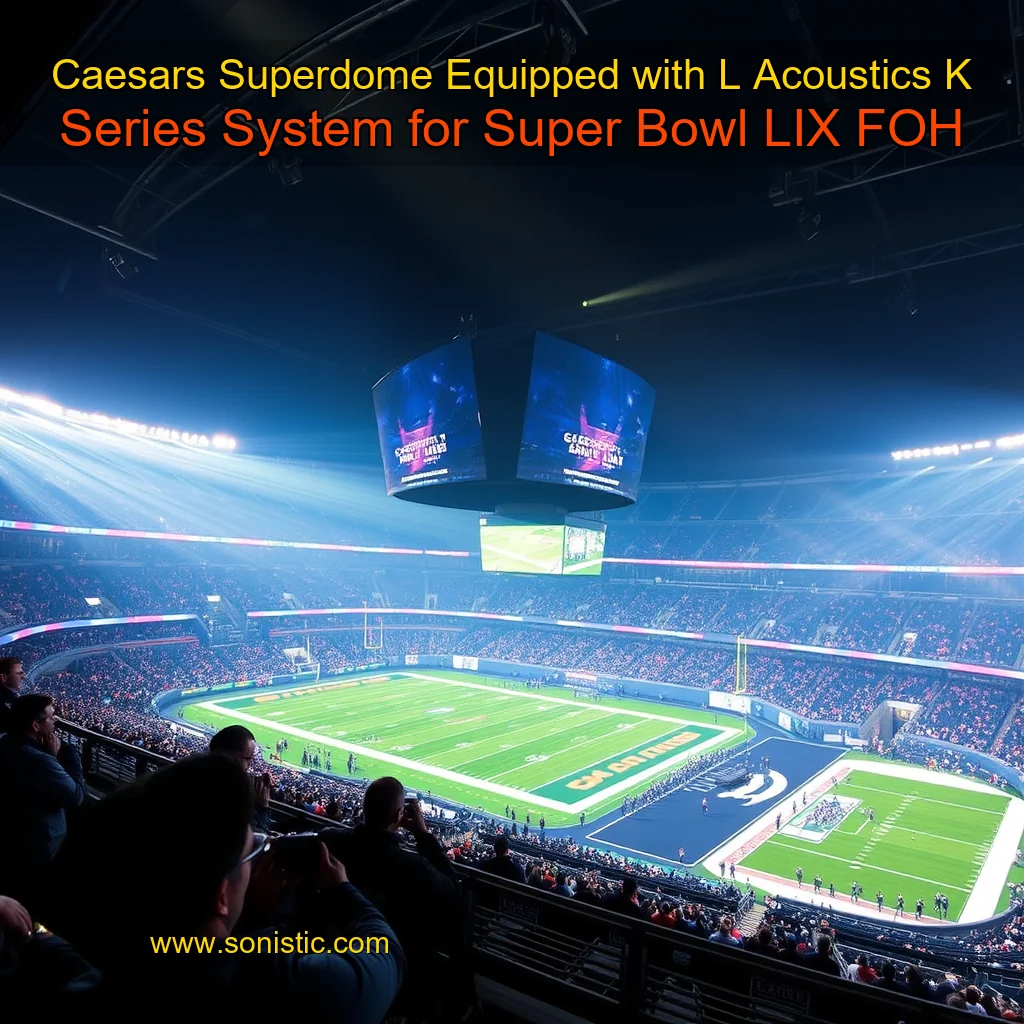
Customized sound system design for high-profile events.
The company’s engineers designed and implemented the sound system for the event, which included a combination of L-Acoustic’s proprietary technology and third-party components.
L-Acoustic’s Innovative Approach
L-Acoustic’s engineers took a unique approach to designing the sound system for the Super Bowl. They chose to use a combination of L-Acoustic’s proprietary technology and third-party components to create a customized solution for the event. This approach allowed them to tailor the sound system to the specific needs of the halftime show and the live audio for the event. Key features of L-Acoustic’s proprietary technology: + Advanced beamforming algorithms + High-resolution audio processing + Customizable sound patterns
+ Increased flexibility and adaptability + Access to a wider range of products and solutions + Cost-effectiveness
The Design Process
The design process for the Super Bowl sound system was a collaborative effort between L-Acoustic’s engineers and the event’s production team. The team worked together to identify the specific requirements for the sound system, including the number of speakers, amplifiers, and processing equipment needed. Key considerations during the design process: + Spectral analysis of the venue + Acoustic modeling of the field + Integration with existing infrastructure
Implementation and Results
The L-Acoustic sound system was implemented on the field during the halftime show, and the results were impressive.
The Superdome’s sound system is one of the largest in the world, with a capacity of 73,000 people. The system is designed to provide clear and crisp sound to the entire stadium, with a focus on the field and the stage.
The History of the Mercedes-Benz Superdome
The Mercedes-Benz Superdome, formerly known as the Louisiana Superdome, has a rich history dating back to 1975. The stadium was built to host the 1984 Super Bowl, but it was completed in 1975 and opened for the 1975 Sugar Bowl. The Superdome has undergone several renovations and expansions over the years, including a major renovation in 2005.
Renovations and Expansions
The system was designed to provide a high-quality audio experience for the halftime show, with a focus on delivering clear and crisp sound to the entire stadium.
System Design and Components
The system was designed to meet the unique demands of a large-scale event like the Super Bowl. To achieve this, the team of engineers and technicians worked closely with the Roc Nation company to ensure that the sound system was tailored to the specific needs of the halftime show. The system consisted of 16 hangs of K2 arrays, which are known for their high-quality sound and versatility. These arrays were strategically placed throughout the stadium to provide optimal coverage and sound quality. The K2 arrays were paired with KS28 subs, which are designed to produce deep bass notes and provide a solid foundation for the sound system. The system also included a number of other components, such as: + 16 K12 subs, which were used to provide additional low-end reinforcement and enhance the overall sound quality. + 16 K10 subs, which were used to provide additional high-end reinforcement and enhance the overall sound quality.
Temporary L-Acoustics PA Systems: The Sound of Flexibility and Quality.
The Rise of Temporary L-Acoustics PA Systems
The temporary L-Acoustics PA systems have become an essential component of live events, particularly in the sports industry. These systems are designed to provide high-quality sound for a specific period, usually for a single event or a short series of events.
Key Features of Temporary L-Acoustics PA Systems
Benefits of Using Temporary L-Acoustics PA Systems
“You gotta be careful not to get too close to the field, or you’ll get hit by a ball or a player.”
The History of the Superdome
The Superdome, officially known as Mercedes-Benz Superdome, is a stadium located in New Orleans, Louisiana. It was opened in 1975 and has been the home of the New Orleans Saints since 1967. The stadium has undergone several renovations and expansions over the years, including a major renovation in 2005.
Early Years
The Superdome was built in the early 1970s, during a time when the NFL was experiencing rapid growth. The stadium was designed to be a state-of-the-art facility, with a seating capacity of over 76,000. It was the fifth oldest stadium in the league at the time of its opening. The Superdome was built with a unique design, featuring a large, domed roof that provided a unique viewing experience for fans. The stadium was designed to be a symbol of New Orleans, with a distinctive French Quarter-inspired design. The Superdome was also built with a number of innovative features, including a retractable roof and a advanced sound system.
Challenges and Controversies
Despite its iconic status, the Superdome has faced several challenges and controversies over the years. One of the most notable was the 2005 Hurricane Katrina disaster, which caused widespread damage to the stadium and surrounding area.
The K2’s ability to adjust its Panflex system allowed the camera to be positioned at a lower height, while the rigging flexibility enabled the coverage to be extended to the entire field.
The Challenges of Shooting in a Confined Space
Shooting a sports event in a confined space like a football field can be a daunting task. The field is typically 300 feet long and 160 feet wide, with a series of obstacles such as goalposts, benches, and advertising boards that can limit camera coverage. The height of the field also poses a challenge, with the goalposts standing at 35 feet high and the upper reaches of the advertising boards reaching as high as 40 feet.
Overcoming the Obstacles
To overcome these challenges, the K Series camera system was employed. The K2 camera, in particular, was chosen for its flexibility and adjustability. Its Panflex system allows for the camera to be positioned at a lower height, providing a more immersive and engaging view of the action. The Panflex system consists of a series of articulated arms that can be adjusted to accommodate different camera angles and positions. The system is designed to be highly flexible, allowing the camera to be positioned in a variety of locations, including low and high angles. The K2 camera can be adjusted to fit into tight spaces, making it ideal for shooting in confined areas.
The Benefits of the K Series
The K Series camera system offers several benefits for shooting sports events in confined spaces. Some of the key advantages include:
The K Series is designed to be a versatile and reliable system for a variety of applications, including live music, public address, and installation.
The Birth of the K Series
The K Series was born out of the need for a high-performance, reliable, and versatile loudspeaker system that could deliver exceptional sound quality and SPL. The designers at JBL, a renowned audio equipment manufacturer, aimed to create a system that would meet the demands of various applications, including live music, public address, and installation.
Key Features and Benefits
The K Series boasts several key features that make it an ideal choice for a wide range of applications:
Applications and Use Cases
The K Series is designed to be a versatile and reliable system for a variety of applications. Here are some examples of how it can be used:
The Big Game: A Sonic Experience Like No Other
The Big Game is one of the most-watched sporting events in the world, with millions of viewers tuning in to witness the ultimate showdown between two of the best teams in the sport. The Philadelphia Eagles, representing the National Football League (NFL), faced off against the Kansas City Chiefs, the reigning champions, in a battle for supremacy. The event was held at the State Farm Stadium in Glendale, Arizona, and the atmosphere was electric.
The Sound System: A Key Component of the Experience
The sound system played a crucial role in creating an immersive experience for the audience. The L-Acoustics K Series arrays were used to deliver a superb sonic experience, with crystal-clear sound and precise imaging. The system’s advanced technology and precision engineering ensured that every seat in the stadium had an optimal listening experience. Key features of the L-Acoustics K Series arrays: + 12 full-range enclosures + 12 subwoofers + 12 mid-range enclosures + 12 tweeters + Advanced signal processing and equalization The sound system was designed to provide a seamless and immersive experience, with sound that was both clear and powerful.