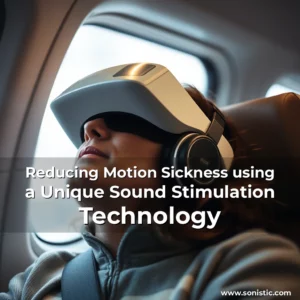

A team of researchers at Nagoya University Graduate School of Medicine has made a groundbreaking discovery that could potentially revolutionize the way we treat motion sickness. Led by Dr. Takumi Kagawa and Dr. Masashi Kato, the team has been working on a novel sound stimulation technology that has shown remarkable results in reducing the symptoms of motion sickness.
What is Motion Sickness?
Motion sickness is a common disorder that affects millions of people worldwide. It occurs when the body receives conflicting signals from the senses, particularly the inner ear and the visual system. This can cause a range of symptoms, including nausea, dizziness, and lightheadedness. Motion sickness can be triggered by a variety of factors, including car travel, boat travel, and even reading in a moving vehicle.
The Science Behind Motion Sickness
The inner ear plays a crucial role in maintaining balance and spatial orientation. The vestibular system, which is located in the inner ear, is responsible for detecting linear acceleration and gravity. When the body receives conflicting signals from the senses, the vestibular system can become overwhelmed, leading to symptoms of motion sickness.
A Unique Sound Stimulation Technology
The researchers at Nagoya University Graduate School of Medicine have developed a unique sound stimulation technology that uses a device to stimulate the inner ear with a specific wavelength of sound. This technology has been shown to reduce the symptoms of motion sickness, including nausea and dizziness. The researchers used a mouse model and humans to test the effectiveness of the technology. They found that exposure to the unique sound stimulated the otolithic organs in the inner ear, which detect linear acceleration and gravity. This suggests that the unique sound stimulation can broadly activate the vestibular system, which is responsible for maintaining balance and spatial orientation.
Results of the Study
The researchers recruited voluntary participants who were exposed to the unique sound and then exposed to a driving simulator or a car. They used postural control, ECG readings, and Motion Sickness Assessment Questionnaire results to assess the effectiveness of the stimulation. The results showed that exposure to the unique sound before being exposed to the driving simulator enhanced sympathetic nerve activation. The researchers found symptoms such as lightheadedness and nausea, which are often seen with motion sickness, were alleviated. These results suggest that activation of sympathetic nerves, which are often dysregulated in motion sickness, was objectively improved by the unique sound exposure.
Safety and Practical Application
The health risk of short-term exposure to the unique sound is minimal. Given that the stimulus level is well below workplace noise safety standards, this stimulation is expected to be safe when used properly. The researchers plan to further develop the technology with the aim of practical application for a variety of travel situations, including air and sea travel.
Conclusion
The discovery of this unique sound stimulation technology offers a safe and effective way to treat motion sickness. With the potential to alleviate millions of sufferers, this breakthrough has the potential to revolutionize the way we travel. The researchers plan to continue their work to develop this technology further and make it available to the public.
What’s in a Name?
The sound stimulation technology used in this study is called “sound spice®.” The researchers chose this name because the unique sound has a distinct, slightly sweet flavor to it, much like a spice. This name is intended to evoke a sense of comfort and relaxation, which is exactly what the technology is designed to provide.
Quotes from the Researchers
“I’m thrilled to share our findings with the scientific community and the public,” said Dr. Kagawa. “Our study demonstrated that short-term stimulation using a unique sound called’sound spice®’ alleviates symptoms of motion sickness, such as nausea and dizziness.”
“The effective sound level falls within the range of everyday environmental noise exposure, suggesting that the sound technology is both effective and safe,” added Dr. Kato. “Vibrations at the unique sound stimulate the otolithic organs in the inner ear, which detect linear acceleration and gravity,” said Dr.
Our research team is committed to further developing the technology with the aim of practical application for a variety of travel situations including air and sea travel.
“A unique sound stimulation technology that uses a device to stimulate the inner ear with a specific wavelength of sound has been shown to reduce the symptoms of motion sickness.”
| Study Details | Results |
|---|---|
| Participants | Voluntary participants who were exposed to the unique sound and then exposed to a driving simulator or a car. |
| Methods | The researchers used postural control, ECG readings, and Motion Sickness Assessment Questionnaire results to assess the effectiveness of the stimulation. |
| Results | Exposure to the unique sound before being exposed to the driving simulator enhanced sympathetic nerve activation. Symptoms such as lightheadedness and nausea, which are often seen with motion sickness, were alleviated. |
- The researchers used a mouse model and humans to test the effectiveness of the technology.
- The unique sound stimulation technology has been shown to reduce the symptoms of motion sickness, including nausea and dizziness.
- The health risk of short-term exposure to the unique sound is minimal.
- The researchers plan to further develop the technology with the aim of practical application for a variety of travel situations, including air and sea travel.
“A unique sound stimulation technology that uses a device to stimulate the inner ear with a specific wavelength of sound has been shown to reduce the symptoms of motion sickness.”
The discovery of this unique sound stimulation technology offers a safe and effective way to treat motion sickness.

news is a contributor at Sonistic. We are committed to providing well-researched, accurate, and valuable content to our readers.