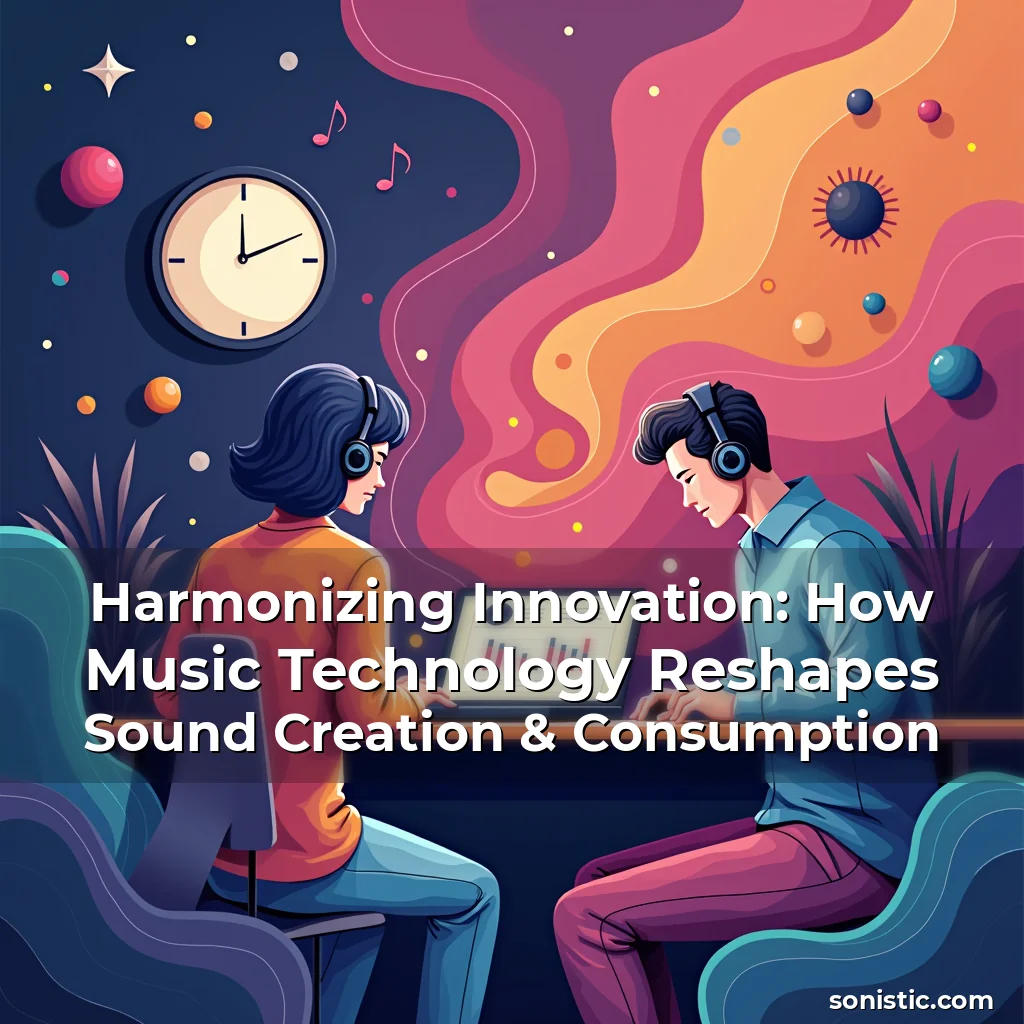
Harmonizing Innovation: How Music Technology Reshapes Sound Creation & Consumption
In an era defined by digital transformation, music technology stands at the intersection of artistry and engineering, revolutionizing how we compose, produce, distribute, and experience music. From artificial intelligence-driven composition tools to immersive spatial audio systems, modern innovations have redefined creativity itself.
The evolution of music technology isn’t merely about convenience—it represents a paradigm shift in artistic expression. As we explore its profound implications across creation, distribution, and consumption, we uncover a landscape where tradition meets cutting-edge innovation in unprecedented ways.
Digital Audio Workstations: The Modern Composer’s Canvas
Digital Audio Workstations (DAWs) have become the cornerstone of contemporary music production, replacing traditional analog studios with powerful software environments. These platforms integrate multitrack recording, virtual instruments, effects processing, and automation into single interfaces accessible via desktop computers or mobile devices.
Leading DAWs like Ableton Live, FL Studio, and Logic Pro X offer intuitive workflows tailored to different genres and creative approaches. Their versatility enables producers to experiment freely with arrangements, layer complex textures, and apply real-time modulation to achieve desired sonic outcomes.
- MIDI Integration: Most DAWs support MIDI controllers, allowing musicians to manipulate parameters physically while composing digitally
- Virtual Instruments: Software synthesizers and sample libraries provide access to thousands of instrument emulations previously restricted to physical equipment
Cloud-based collaboration features now enable artists worldwide to co-
Educational Resources & Accessibility Innovations
Online learning platforms like Coursera, Udemy, and YouTube tutorials have made expert-level knowledge accessible globally, reducing barriers to entry for aspiring musicians and producers everywhere.
Interactive apps such as Yousician and Flowkey gamify instrumental practice, combining real-time feedback with progress tracking to make skill development enjoyable and measurable.
- Affordable Instrument Access: Products like the Yamaha PSR-E373 keyboard and Akai MPC Renaissance provide professional-grade tools at consumer-friendly prices
- Assistive Technologies: Hearing-impaired individuals benefit from vibrating tactile feedback systems integrated into MIDI controllers and drum pads
Scholarship programs offered by institutions like Berklee Online and online communities foster inclusivity, empowering diverse voices to contribute meaningfully to the global music ecosystem.
Open-source initiatives continue expanding educational equity by providing free access to industry-standard tools and curriculum materials through platforms like GitHub and Open Music Initiative.
The Future Soundscape: Emerging Trends & Predictions
Quantum computing research may soon revolutionize music theory analysis and generative composition, opening doors to entirely new forms of musical expression previously unimaginable.
Neurotechnology experiments exploring brain-computer interfaces suggest potential for direct neural input into musical creation processes, blurring lines between thought and sound manifestation.
- Biometric Feedback Systems: Wearables that translate physiological responses into real-time musical outputs could redefine interactive performances
- Environmental Sound Capture: Advanced sensors might soon convert natural phenomena into usable audio samples for compositional use
With sustainability concerns driving innovation, eco-conscious manufacturing practices and energy-efficient device designs will likely become standard in upcoming product releases.
As these developments unfold, the core mission of music technology remains unchanged—to empower creators while enriching humanity’s collective cultural tapestry through innovative sound experiences.
Conclusion
Music technology has evolved far beyond simple digitization efforts, becoming a catalyst for artistic reinvention across every facet of the industry. Its influence spans creation, dissemination, and appreciation in equally profound ways.
To stay ahead in this ever-evolving field, embrace continuous learning through experimentation with new tools and active participation in evolving technological landscapes that define tomorrow’s musical frontier.

news is a contributor at Sonistic. We are committed to providing well-researched, accurate, and valuable content to our readers.