The Sonic Tapestry: Exploring Immersive Audio Experiences in Modern Life
In an era where sound is no longer confined to passive consumption, immersive audio experiences have transformed how we interact with music, media, and even our environments. From spatial audio in virtual reality to personalized hearing solutions, the evolution of auditory technology has opened new dimensions of engagement.
This exploration delves into the science behind these innovations, their applications across industries, and how they are reshaping human perception and interaction. The journey begins by understanding what makes certain sounds feel alive and present.
The Science Behind Sound Localization
Spatial audio relies on the brain’s ability to interpret subtle differences between sounds reaching each ear. This natural process allows us to pinpoint the direction and distance of any noise source without visual cues.
Researchers have mapped out binaural cues such as interaural time difference (ITD) and interaural level difference (ILD). These factors determine how our brains perceive depth and location within a sonic landscape.
Modern technologies replicate these biological processes using algorithms that simulate head-related transfer functions (HRTFs). By adjusting frequency responses based on sound origin points, devices can create convincing three-dimensional soundscapes.
- Binaural recording techniques use microphones placed inside dummy heads to capture natural acoustic properties
- Doppler effect simulations add motion perception when objects move relative to listeners
These scientific principles form the foundation for everything from movie theaters’ surround systems to augmented reality applications that overlay digital sounds onto physical spaces.
Immersive Technologies Redefining Auditory Spaces
Virtual reality headsets now integrate advanced audio processing units capable of rendering dynamic 360-degree sound fields. Unlike traditional stereo setups, these systems track user movement in real-time.
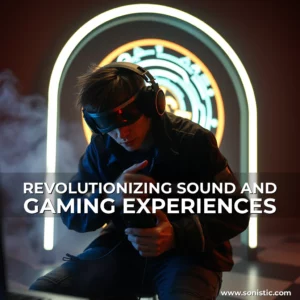
Games developers leverage this capability to enhance gameplay immersion. When players turn their heads, ambient noises shift accordingly, creating a sense of presence within virtual worlds.
Haptic feedback combined with directional audio produces multi-sensory experiences. For example, feeling vibrations while simultaneously hearing thunder approaching from your left creates powerful emotional responses.
Architects experiment with acoustically responsive buildings that adjust internal sound environments based on occupancy levels and external conditions.
Case Study: Sony’s 360 Reality Audio
Sony’s implementation of object-based audio streaming delivers individualized listening experiences through smart speakers. Their system uses machine learning to adapt sound profiles according to room characteristics.
Data collected from millions of users helps refine algorithms that predict optimal speaker placement and volume adjustments for different types of content.
Studies show that listeners report up to 40% greater emotional engagement with music streamed via this technology compared to standard stereo formats.
This case study illustrates how commercial applications are pushing the boundaries of what’s possible with current audio engineering practices.
Auditory Accessibility Innovations
Recent advancements in assistive listening technologies address both hearing impairments and environmental challenges faced by individuals with sensory sensitivities.
Cochlear implants now feature neural stimulation patterns that mimic natural auditory signals more accurately than previous generations. These improvements allow recipients better speech comprehension in noisy settings.
Smartphone apps employ AI-driven voice modulation to help people with dyslexia or autism spectrum disorder process spoken language more effectively.
Public transportation networks implement alerting systems that combine visual indicators with customized audio notifications tailored to specific passenger needs.
Educational Applications of Spatial Audio
Medical schools utilize VR platforms with integrated haptic gloves and directional audio for surgical training. Surgeons-in-training experience realistic tissue resistance along with precise sound localization during simulated procedures.
Language learners benefit from interactive pronunciation guides that provide immediate audio feedback comparing their speech patterns to native speakers’ recordings.
Museums deploy AR exhibits where visitors hear historical narratives originating exactly from the locations where events actually occurred centuries ago.
Classroom environments equipped with adaptive audio systems reduce background distractions, allowing students to maintain focus during lectures.
Audio Experiences in Mental Health Therapies
Sound therapy sessions incorporate carefully curated frequencies designed to induce relaxation states or alleviate anxiety symptoms. Binaural beats at specific Hz ranges influence brainwave activity patterns.
Music therapists prescribe personalized playlists containing rhythmic elements that match patients’ heart rates during stress management programs.
Virtual nature environments with ambient sounds like ocean waves or forest birdsong prove effective in reducing cortisol levels among hospitalized patients.
Pilot studies indicate that combining therapeutic music with guided visualization exercises enhances treatment outcomes for PTSD sufferers significantly.
Future Frontiers in Sonic Innovation
Neuroscientists collaborate with engineers to develop direct-to-brain audio interfaces that bypass conventional sound transmission methods entirely. Early prototypes demonstrate potential for restoring hearing in profoundly deaf individuals.
Quantum computing research may soon enable instantaneous translation of complex auditory data streams, revolutionizing international communication and accessibility services globally.
Biometric sensors embedded in wearable tech could dynamically adjust audio output based on physiological parameters like blood pressure or skin conductivity levels.
As materials science advances, researchers explore piezoelectric fabrics that convert mechanical vibrations into audible signals, opening possibilities for tactile-audio hybrid communication systems.
Conclusion
The convergence of neuroscience, artificial intelligence, and acoustics continues to reshape our relationship with sound in profound ways. What was once limited to entertainment is now impacting healthcare, education, and daily life interactions.
To fully embrace these evolving audio experiences, consumers should stay informed about emerging technologies while maintaining awareness of ethical considerations surrounding personal data collection and usage in immersive sound environments.

news is a contributor at Sonistic. We are committed to providing well-researched, accurate, and valuable content to our readers.