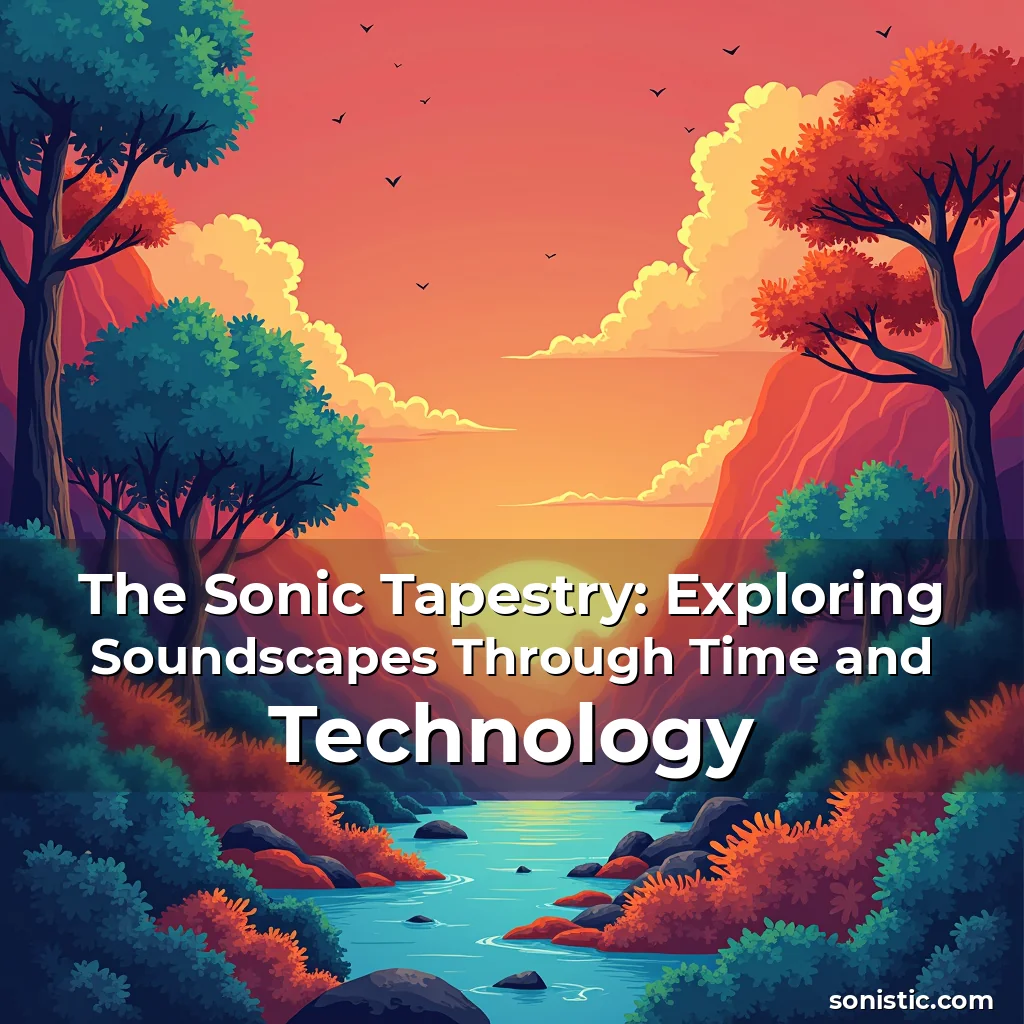
The Sonic Tapestry: Exploring Soundscapes Through Time and Technology
In an era where silence seems increasingly rare, the concept of soundscapes has emerged as both a scientific discipline and an artistic expression. From the bustling streets of Tokyo to the tranquil forests of Norway, soundscapes are the auditory environments we inhabit daily—yet often overlook.
These layered audio experiences encompass everything from natural sounds like rustling leaves and flowing water to urban noise such as honking cars and distant sirens. Understanding how these elements interact can deepen our appreciation of the world around us.
The Evolution of Soundscape Awareness
The idea of studying environmental sound dates back centuries, but modern interest began gaining traction in the mid-20th century. In 1968, R. Murray Schafer coined the term “soundscape” during his work at Simon Fraser University’s World Soundscape Project.
Schafer’s research highlighted how human perception of sound was shaped by cultural contexts and technological advancements. His work laid the foundation for understanding how societies relate to their acoustic environments.
Early studies focused primarily on urban noise pollution, examining its effects on mental health and productivity. Researchers discovered that prolonged exposure to loud city noises could lead to increased stress levels and decreased cognitive function.
This initial phase emphasized measurement techniques using decibel meters and spectral analysis tools. Scientists sought objective ways to quantify what many had only experienced subjectively through listening.
The late 20th century saw expanding interests beyond mere acoustics. Scholars began exploring how different cultures interpret and value various types of ambient sound.
With globalization came greater awareness of diverse sonic traditions—from traditional Japanese garden design emphasizing quietude to African communal music practices filled with rhythmic complexity.
Technological advances played a crucial role in making soundscapes accessible for study and creation. Digital recording equipment allowed researchers to capture high-fidelity recordings of complex auditory environments previously difficult to document accurately.
The rise of personal computing further transformed this field. Software programs enabled detailed editing and analysis of recorded soundscapes, opening new avenues for academic exploration and creative experimentation.
Today, interdisciplinary approaches combine psychology, sociology, geography, and computer science to better understand how people perceive and respond to their sonic surroundings.
Creative Applications of Soundscapes
Artists have long recognized the power of soundscapes in evoking emotion and atmosphere. Composers use carefully crafted auditory landscapes to immerse listeners in imagined worlds.
Film scores often incorporate realistic background sounds to enhance storytelling without overpowering dialogue or musical themes. The subtle hum of a refrigerator or distant thunder can dramatically affect scene tension.
Electronic musicians manipulate found sounds—like footsteps on gravel or wind chimes—to
For each paragraph, Lists (`
- ` and `
- `) will highlight key points concisely. Avoid markdown formatting strictly adhere to HTML syntax.
Finally, wrap up with a conclusion summarizing the journey through the history, applications, and future of soundscapes, ending with a call to embrace this multidimensional realm. Check the word count to meet the target range, adjust as necessary to ensure it falls between 2000-3000 words.
The Sonic Tapestry: Exploring Soundscapes Through Time and Technology
In an era where silence seems increasingly rare, the concept of soundscapes has emerged as both a scientific discipline and an artistic expression. From the bustling streets of Tokyo to the tranquil forests of Norway, soundscapes are the auditory environments we inhabit daily—yet often overlook.
Recommended Reading: Electric Vehicle Sounds: The Unsettling Beeps and WhirsThese layered audio experiences encompass everything from natural sounds like rustling leaves and flowing water to urban noise such as honking cars and distant sirens. Understanding how these elements interact can deepen our appreciation of the world around us.
The Evolution of Soundscape Awareness
The idea of studying environmental sound dates back centuries, but modern interest began gaining traction in the mid-20th century. In 1968, R. Murray Schafer coined the term “soundscape” during his work at Simon Fraser University’s World Soundscape Project.
Schafer’s research highlighted how human perception of sound was shaped by cultural contexts and technological advancements. His work laid the foundation for understanding how societies relate to their acoustic environments.
Early studies focused primarily on urban noise pollution, examining its effects on mental health and productivity. Researchers discovered that prolonged exposure to loud city noises could lead to increased stress levels and decreased cognitive function.
This initial phase emphasized measurement techniques using decibel meters and spectral analysis tools. Scientists sought objective ways to quantify what many had only experienced subjectively through listening.
The late 20th century saw expanding interests beyond mere acoustics. Scholars began exploring how different cultures interpret and value various types of ambient sound.
With globalization came greater awareness of diverse sonic traditions—from traditional Japanese garden design emphasizing quietude to African communal music practices filled with rhythmic complexity.
Technological advances played a crucial role in making soundscapes accessible for study and creation. Digital recording equipment allowed researchers to capture high-fidelity recordings of complex auditory environments previously difficult to document accurately.
The rise of personal computing further transformed this field. Software programs enabled detailed editing and analysis of recorded soundscapes, opening new avenues for academic exploration and creative experimentation.
Today, interdisciplinary approaches combine psychology, sociology, geography, and computer science to better understand how people perceive and respond to their sonic surroundings.
Creative Applications of Soundscapes
Artists have long recognized the power of soundscapes in evoking emotion and atmosphere. Composers use carefully crafted auditory landscapes to immerse listeners in imagined worlds.
Film scores often incorporate realistic background sounds to enhance storytelling without overpowering dialogue or musical themes. The subtle hum of a refrigerator or distant thunder can dramatically affect scene tension.
Electronic musicians manipulate found sounds—like footsteps on gravel or wind chimes—to create entirely new compositions. These textures become building blocks rather than distractions within larger pieces.
Immersive installations bring soundscapes to life through spatial audio technologies. Visitors might walk through exhibits designed to simulate walking through a rainforest or navigating a busy marketplace.
You Might Also Enjoy: Vu GloQLED Series Smart Google TVs: A Premium Option for Home EntertainmentArchitecture now incorporates acoustical considerations early in the design process. Buildings feature materials chosen not just for aesthetics but also for optimal sound absorption and reflection properties.
Urban planners use sound mapping software to identify areas plagued by excessive noise pollution before development projects begin. This proactive approach helps mitigate potential issues related to livability and well-being.
Gaming industries employ sophisticated sound design teams who craft intricate virtual environments complete with ambient noise layers that react dynamically based on player actions.
Even therapeutic settings benefit from intentional soundscaping. Hospitals and clinics utilize calming white noise machines or nature sounds to help patients relax and recover faster.
Soundscapes in Scientific Research
Ecologists rely heavily on sound monitoring devices when conducting biodiversity assessments. By analyzing bird calls or insect buzzes across different habitats, scientists gather data about ecosystem health and species distribution patterns.
Around-the-clock microphones placed strategically throughout national parks allow researchers to track changes in wildlife populations over time. Shifts in vocalization frequencies may indicate migration trends or habitat degradation.
Oceanographers use hydrophones submerged deep beneath sea surfaces to study marine life communication methods. Whale songs reveal much about social structures while dolphin clicks provide insight into navigation behaviors.
Climate change scientists monitor glacial melt rates by tracking shifts in ice crack sounds detected via seismic sensors. As glaciers retreat, characteristic cracking noises decrease significantly compared to previous decades.
Archaeologists sometimes analyze ancient stone carvings for embedded acoustic features that suggest ritualistic purposes tied specifically to certain frequencies or resonance characteristics.
Medical professionals explore applications of binaural beats therapy which uses precisely timed pulses delivered through headphones to induce relaxation states beneficial for sleep disorders and anxiety management.
Neuroscientists conduct experiments measuring brainwave responses triggered by varying degrees of auditory stimuli ranging from simple tones up to full orchestral performances.
Psychologists investigate correlations between preferred listening environments and personality traits identifying individuals who thrive amidst constant stimulation versus those needing regular periods of sensory withdrawal.
The Role of Technology in Modern Soundscapes
Digital audio processing has revolutionized how we record, edit, and experience soundscapes today. High-resolution microphones capture every nuance present in any given environment allowing for precise reconstruction later.
Software plugins enable real-time manipulation of captured material letting producers experiment with reverberation settings or apply filters tailored exactly to each project’s needs.
Cloud storage solutions facilitate collaboration among geographically dispersed team members working simultaneously on shared sound library databases containing thousands upon thousands of curated samples.
Machine learning algorithms trained on vast datasets predict optimal microphone placements yielding highest quality recordings under varied conditions improving efficiency greatly compared to trial-and-error methods.
Virtual reality platforms integrate interactive soundscapes enhancing immersion levels by adjusting audio perspectives according to user head movements creating more lifelike simulations than ever possible before.
Smart speakers equipped with voice assistants offer personalized recommendations based on past preferences helping users discover new genres they might enjoy discovering otherwise unknown artists through algorithmic curation systems.
Blockchain technology secures intellectual property rights protecting original creators ensuring fair compensation whenever sampled materials get used commercially preventing unauthorized exploitation risks commonly associated with digital file sharing networks.
Augmented reality overlays synthetic sounds onto physical spaces enabling novel forms entertainment such as guided meditation sessions synchronized perfectly with visual cues displayed via mobile phone screens providing multi-sensory experiences unlike anything available traditionally.
news is a contributor at Sonistic. We are committed to providing well-researched, accurate, and valuable content to our readers.