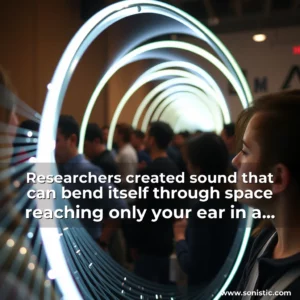

The frequency of the vibration determines the pitch of the sound.
While spatial audio has the potential to revolutionize entertainment, communication, and spatial audio experiences, there are also several challenges and limitations to consider.
The higher the frequency, the higher the pitch. The lower the frequency, the lower the pitch. This concept is demonstrated through the use of instruments such as the guitar and piano. On the guitar, higher notes are produced by pressing the strings closer together, while lower notes are produced by leaving the strings farther apart. On the piano, the higher notes are produced by striking the strings with a lighter touch, while the lower notes are produced by striking the strings with a firmer touch. The frequency of the sound produced is determined by the tension of the strings and the distance between them. By adjusting these factors, musicians can produce a wide range of pitches and tones. The ability to control sound waves is also demonstrated by the use of various musical instruments such as the flute and the trumpet. These instruments are designed to manipulate sound waves in different ways, allowing musicians to produce a variety of pitches and tones.
Ultrasound technology has been used in various fields, including medicine, manufacturing, and non-destructive testing.
Medical Applications
Ultrasound technology has numerous applications in medicine, particularly in the field of diagnostics and treatment. Some of the key medical applications of ultrasound technology include:
Ultrasound technology is also used in manufacturing, particularly in the production of materials and products.
This phenomenon is known as the ultrasound-induced acoustic wave or acoustic self-interference.
Understanding the Principle of Acoustic Self-Interference
The principle of acoustic self-interference is based on the concept of nonlinear interactions between sound waves. When two or more sound waves interact, they can either add up linearly or nonlinearly.
This phenomenon is known as the acoustic shadowing effect.
Medical Imaging
Acoustic shadowing can be used to create high-resolution images of internal organs and tissues. By directing ultrasound beams at specific areas of the body, medical professionals can create detailed images of internal structures, allowing for more accurate diagnoses and treatments. • Acoustic shadowing can be used to create images of organs such as the liver, kidneys, and gallbladder.
Envisioning a Future with Audio Enclaves
Imagine strolling through a bustling museum, surrounded by the whispers of ancient civilizations, the murmurs of art historians, and the gentle hum of guided tours.
Gone are the days of traditional audio systems, where speakers and amplifiers were the primary focus. With the rise of audio enclaves, the emphasis has shifted to immersive, 3D audio experiences that envelop the listener in a rich, spatial sound field.
How Audio Enclaves Work
Audio enclaves use advanced audio processing techniques to create a 3D sound field that surrounds the listener. This is achieved through the use of multiple speakers, each positioned to create a specific sound source.

news is a contributor at Sonistic. We are committed to providing well-researched, accurate, and valuable content to our readers.