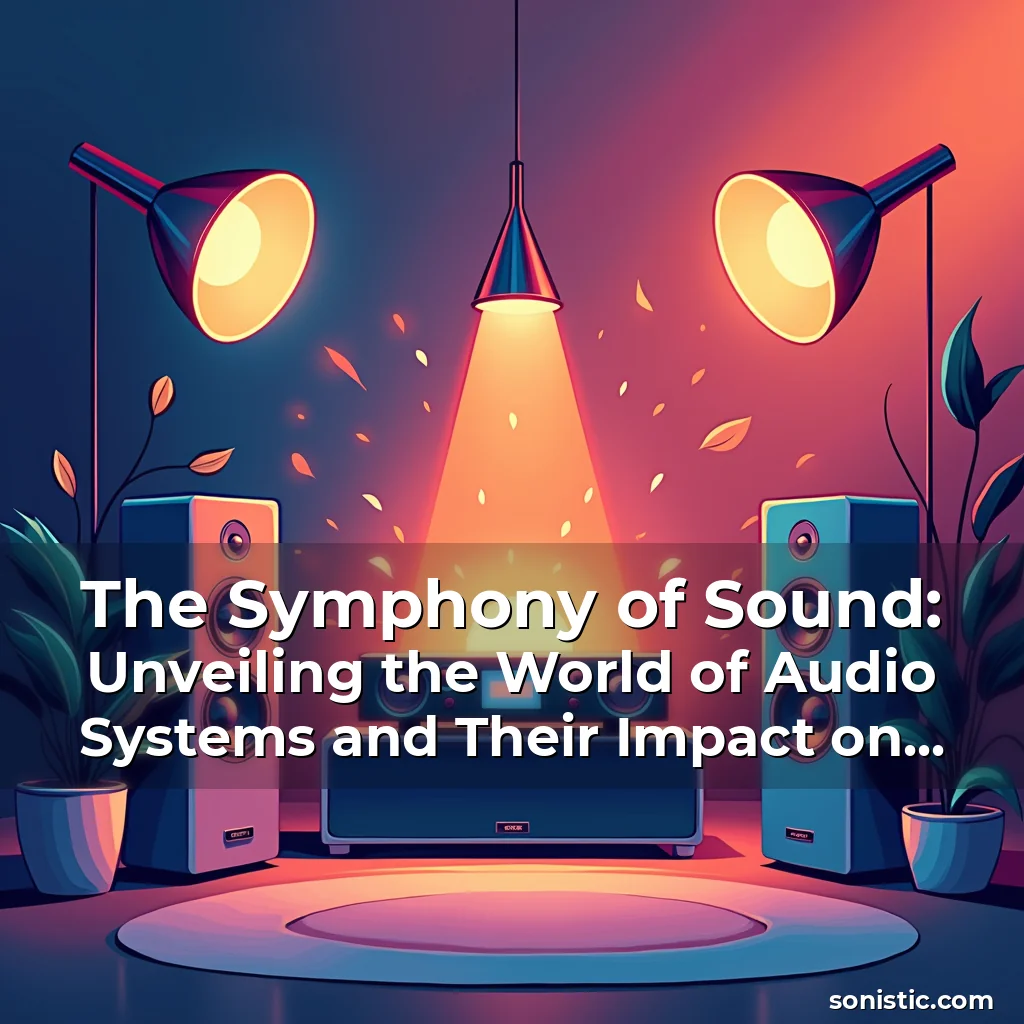
The Symphony of Sound: Unveiling the World of Audio Systems and Their Impact on Modern Living
In an era where sound quality is as crucial as visual clarity, understanding the intricacies of audio systems has become essential. From immersive home theaters to high-fidelity headphones, these systems shape our auditory experiences in profound ways.
Audio systems are not merely devices; they are gateways to richer, more nuanced sonic landscapes that enhance everything from entertainment to communication. Whether you’re a casual listener or a dedicated audiophile, exploring their components and capabilities can transform your relationship with sound.
The Evolution of Audio Technology Through Time
The journey of audio technology began in the late 19th century with Thomas Edison’s invention of the phonograph. This groundbreaking device allowed people to record and playback sounds, marking the birth of modern audio reproduction.
As decades passed, innovations such as magnetic tape recording and vinyl records revolutionized how music was stored and played back. These advancements laid the foundation for today’s digital audio landscape by improving fidelity and accessibility.
Moving into the 1980s, compact discs emerged as a game-changer, offering superior sound quality compared to analog formats. The transition from physical media to digital storage further accelerated during the early 2000s with MP3 players and streaming services.
Todays’ audio systems integrate cutting-edge technologies like AI-driven equalization and spatial audio processing, creating personalized listening environments tailored to individual preferences.
- Phonographs: Pioneered by Edison, these mechanical devices used cylinders covered in tinfoil to capture and reproduce sound waves through vibration.
- Vinyl Records: Introduced in the mid-20th century, they provided higher dynamic range than earlier formats but were eventually supplanted by CDs due to their susceptibility to wear over time.
Diverse Types of Audio Systems Across Industries
Audio systems vary widely depending on their intended use case. Home stereo setups differ significantly from professional studio equipment designed for precise sound engineering tasks.
Live performance venues require robust PA systems capable of delivering clear audio even at high decibel levels without distortion. Meanwhile, automotive audio installations prioritize space efficiency while maintaining rich bass response characteristics.
Hospitality sectors employ specialized background music systems that blend seamlessly with ambient noise yet remain audible enough to guide guests effectively within spaces like airports or hotels.
Specialized Applications in Healthcare Settings
Healthcare facilities utilize advanced audio systems beyond basic announcements. For instance, hospitals implement intercom networks connected to nurse stations allowing rapid communication between staff members across different wings.
Patient rooms often feature custom-designed speaker placements optimized for therapeutic purposes such as playing calming melodies aimed at reducing anxiety among patients undergoing treatment procedures.
Fundamental Components That Define Quality Audio Performance
At its core, every effective audio system comprises several key elements working together harmoniously. Understanding each component’s role helps users make informed decisions when selecting new gear or upgrading existing setups.
Speakers serve as the final link in translating electrical signals into audible frequencies we perceive as sound. High-quality drivers ensure accurate frequency reproduction across various ranges—from deep sub-bass vibrations up through crisp treble notes.
An amplifier boosts weak signal outputs from sources like turntables or smartphones before sending them to speakers. Proper matching between amplifiers and speakers ensures optimal power delivery without causing damage or distortion issues.
Source devices generate original content which gets processed throughout the chain until reaching end listeners. Common examples include CD players, streaming boxes, and personal computers equipped with appropriate software applications.
Choosing Between Analog vs Digital Signal Processing Techniques
Selecting between analog and digital signal processing methods depends largely on desired outcomes regarding warmth versus precision in sound output. Both approaches have distinct advantages catering towards particular applications within audio production circles.
Analog circuits manipulate continuous voltage waveforms representing actual acoustic properties found naturally occurring sounds. Many vintage consoles favored analog workflows because they produced smoother transitions between tonal shifts unlike abrupt changes seen in purely numerical representations offered by digital alternatives.
Digital processors convert incoming signals into binary data streams using sampling rates measured in kilohertz (kHz). Higher resolution samples yield greater accuracy preserving subtle nuances present within complex recordings better suited for mastering sessions requiring minute adjustments across entire mixes.
Optimizing Room Acoustics For Better Listening Experiences
Even top-tier hardware cannot compensate fully for poor room acoustics unless addressed properly. Identifying problematic areas within living spaces enables targeted improvements enhancing overall enjoyment levels regardless of setup type chosen initially.
Reflection patterns play significant roles determining perceived loudness distribution around rooms. Strategically placing absorptive materials along walls opposite primary listening positions reduces unwanted echoes bouncing off hard surfaces repeatedly.
Bass trapping techniques involve installing dense foam panels inside corners where low-frequency energy tends accumulate excessively leading potentially damaging resonance conditions if left uncorrected permanently affecting future usability potential once implemented correctly done right first attempt makes difference long term satisfaction achieved afterward.
Emerging Trends Shaping Future Developments In Audio Engineering Fields
The field continues evolving rapidly driven primarily by advances made possible through artificial intelligence integration alongside increasing demand for more natural-sounding virtual reality simulations featuring realistic three-dimensional audio cues embedded directly within interactive experiences consuming audiences globally nowadays.
Immersive surround sound technologies now extend beyond traditional five-point configurations embracing object-based rendering paradigms enabling independent movement tracking of individual sonic elements across multi-channel arrays dynamically adjusting based upon viewer head movements recorded via motion sensors integrated into latest generation VR headsets available commercially today.
Additionally, smart home automation platforms increasingly incorporate voice-controlled interfaces managing volume controls automatically according to time-of-day schedules pre-programmed manually beforehand ensuring consistent comfort levels maintained consistently throughout daily routines without needing manual intervention required previously.
Evaluating Criteria When Selecting Ideal Audio Equipment Options
Before making purchases, establishing clear priorities becomes critical step influencing eventual choices positively impacting user satisfaction post-purchase period considerably. Factors ranging from budget constraints limiting options accessible otherwise would be impractical financially speaking also matter greatly here too.
Listening tests conducted under controlled conditions help identify differences imperceptible during initial quick assessments performed hastily without adequate preparation involved beforehand. Using reference tracks known for neutrality assists comparisons accurately measuring performance discrepancies objectively rather subjectively relying solely upon personal taste alone could lead misleading conclusions sometimes unavoidable unfortunately though still preferable whenever feasible circumstances permit doing so safely.
Compatibility checks verify whether proposed additions will work well together functionally avoiding conflicts arising unexpectedly later down line after installation completed successfully initially thought perfect solution turned out incompatible actually ultimately defeating purpose altogether wasted resources spent unnecessarily acquiring wrong pieces altogether.
Care And Maintenance Practices To Extend Lifespan Of Your Investment
Regular upkeep prevents premature degradation caused mainly by environmental factors affecting delicate internal mechanisms housed securely within enclosures protecting sensitive electronic parts against external threats posed regularly encountered everyday life situations involving accidental spills moisture exposure etcetera.
Keeping dust filters clean prolongs operational longevity dramatically since accumulated debris restricts airflow circulation necessary cooling processes keeping temperatures regulated appropriately preventing overheating incidents possibly resulting catastrophic failures irreversibly destroying expensive components forever lost entirely replaced completely new units purchased instead.
Scheduled servicing appointments recommended annually minimum ideally biannually especially high usage scenarios demanding frequent operation extended hours durations exceeding normal expectations set forth manufacturer guidelines explicitly stated clearly documented somewhere easily located referenced quickly whenever needed conveniently accessible remotely online perhaps?
Using surge protectors safeguards against unexpected voltage fluctuations originating from lightning strikes nearby storms passing overhead suddenly causing spikes momentarily damaging circuitry irreparably ruining functionality altogether rendered useless nonfunctional state requiring replacement sooner rather waiting longer risking prolonged downtime inconvenience experienced subsequently afterwards.
Conclusion
Understanding the complexities behind modern audio systems empowers individuals to appreciate the science driving exceptional sound reproduction capabilities achievable today thanks ongoing research efforts pushing boundaries continually expanding horizons what considered possible yesterday becoming standard practice commonplace tomorrow soon.
By staying informed about emerging trends shaping industry directions combined practical knowledge gained applying learned principles strategically optimizing current setups effectively preparing oneself adapt smoothly transitioning effortlessly embracing next generations enhancements arriving inevitably shortly thereafter.

news is a contributor at Sonistic. We are committed to providing well-researched, accurate, and valuable content to our readers.